
Employee retention strategies have become essential for organizations navigating fast-changing workplace expectations, labor shortages, and rising competition for skilled talent. Across Canada, employers in every industry—from healthcare to technology—are feeling the pressure to not just attract quality employees but keep them.
From my experience working with HR leaders, consultants, and Canadian organizations over the last decade, one theme consistently rises to the surface: employees don’t stay for perks—they stay for opportunity, flexibility, belonging, and trust.
This guide outlines the most impactful strategies companies are using in 2025-26 to improve retention, reduce turnover costs, and create workplaces where people genuinely want to stay.
Understanding Employee Retention in Today’s Evolving Work Environment
Employee retention looks very different today than it did even five years ago. Hybrid work, digital transformation, economic uncertainty, and generational shifts have reshaped what workers expect from employers.
Why Retention Matters in High-Turnover Industries
Industries such as hospitality, customer support, retail, and healthcare continue to face turnover rates significantly above the national average. For example:
- Canadian retail turnover averages 40–65%.
- Healthcare support roles experience chronic staffing shortages.
- Tech talent leaves quickly when career growth is unclear.
Frequent turnover weakens service quality, slows productivity, and increases stress for remaining staff—creating a cycle that’s hard to break without strong retention strategies.
The Cost of Poor Retention for Employers
Replacing just one full-time employee can cost:
- 50–200% of their annual salary
- Lost productivity for 3–12 months
- Extra pressure on existing staff
- Higher absenteeism
The business case for retention isn’t just HR-driven—it’s a direct financial advantage.
Key Employee Retention Strategies Organizations Need Now
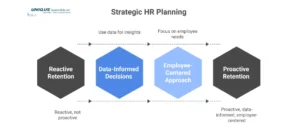
Here is where effective leadership meets strategic HR planning. Modern retention isn’t reactive; it’s proactive, data-informed, and employee-centered.
Building a Strong Hybrid Work Policy That Supports Flexibility
A hybrid work policy is one of the most influential employee retention strategies in 2025-26. Employees want flexibility without losing connection to their teams.
Structuring Hybrid Schedules for Productivity & Culture
The most successful hybrid structures balance:
- Predictable team collaboration days
- Remote “deep work” days
- Clear guidelines on communication
- Meeting-free blocks for focus time
A well-designed hybrid model reduces anxiety (“When do I need to be in the office?”) and eliminates the chaos of unclear expectations.
Technology Tools That Enhance Hybrid Collaboration
Hybrid teams depend on strong digital foundations. At a minimum, organizations should invest in:
- Cloud collaboration tools
- Video meeting platforms
- Task/project management tools
- Secure VPN and cybersecurity protocols
When technology feels seamless, hybrid work becomes sustainable—not a burden.
Digital Skills Training Programs for a Future-Ready Workforce
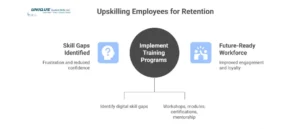
Digital skills training is no longer optional—it’s a retention asset. Employees want to grow, and companies that invest in upskilling see improved engagement and loyalty.
Identifying Skill Gaps and Training Priorities
HR teams can conduct digital skill assessments across:
- Productivity software
- AI-assisted tools
- Data literacy
- Cybersecurity basics
- Industry-specific systems
Organizations that identify these gaps early can craft training initiatives that reduce frustration and increase confidence.
Creating Continuous Learning Pathways
Effective digital training includes:
- Instructor-led workshops
- Microlearning modules
- Certification paths
- Mentorship programs
- Learning Management Systems (LMS)
When employees can visualize a long-term career path, they are significantly more likely to stay.
HR Trends Canada: What’s Driving Staffing Challenges in 2025
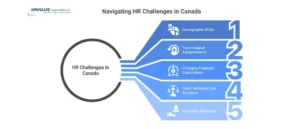
The Canadian labor market continues to shift, bringing new retention challenges.
Labour Market Shifts and Talent Shortages
According to Statistics Canada, several industries face persistent shortages due to:
- Aging workforce
- Increased job mobility
- Competition from U.S.-based remote employers
- Skills mismatch
Retention is now a strategic differentiator.
Remote Work Expectations in Canada
Over 70% of Canadian workers want hybrid or remote options. Organizations that enforce full-time office schedules experience noticeably higher turnover.
AI, Automation & The Future of HR
AI is transforming HR operations—resume screening, onboarding, engagement tracking—but employees still want human-centered leadership. The companies that blend automation with empathy are winning the retention battle.
How to Strengthen Workplace Culture for Long-Term Retention
Culture is the backbone of retention. Employees remain loyal where they feel appreciated, supported, and connected.
Recognition and Reward Systems That Actually Work
The most effective recognition programs are:
- Timely
- Specific
- Public (when appropriate)
- Inclusive
- Aligned with organizational values
Strengthen Workplace Culture for Long-Term Retention
A strong workplace culture isn’t created by accident—it’s built through intentional communication, supportive leadership, and a shared sense of purpose. Culture directly impacts whether employees feel proud of where they work, and it remains one of the most influential employee retention strategies in 2025-2026.
Recognition and Reward Systems That Actually Work
Employees stay longer when they feel seen and valued. But recognition programs work best when they are meaningful, consistent, and well-structured.
Effective approaches include:
- Real-time recognition: Immediate praise through digital tools or team meetings.
- Peer-to-peer acknowledgment: Programs that allow employees to recognize each other.
- Milestone celebrations: Work anniversaries, certifications, and personal achievements.
- Performance-based rewards: Bonuses, incentives, or profit-sharing.
- Non-monetary recognition: Additional PTO, flexible hours, or public shout-outs.
The goal is to create a system where employees feel appreciated regularly—not just during annual reviews.
Diversity, Equity & Inclusion (DEI) as Core Retention Drivers
DEI has become a cornerstone of modern HR strategy. Employees want to work where they feel respected, represented, and empowered.
Strong DEI initiatives often include:
- Transparent pay equity audits
- Diverse leadership representation
- Accessible career pathways for underrepresented groups
- Bias-reduction training
- Employee resource groups (ERGs) that support community building
Organizations that prioritize DEI see measurable improvements in engagement, innovation, and long-term retention.
Mental Health & Wellness Programs
In 2025, mental health isn’t a perk—it’s an expectation. Deloitte and other top HR research firms show that wellness programs significantly reduce turnover and absenteeism.
High-retention companies typically offer:
- Employee Assistance Programs (EAP)
- Mental health days
- Health spending accounts
- Wellness stipends for fitness or therapy
- Burnout-prevention strategies
- Flexible scheduling policies
Promoting wellness supports productivity and shows employees their well-being is a priority.
Measuring the Effectiveness of Employee Retention Strategies
You can’t improve what you don’t measure. Organizations with strong retention programs consistently track the data behind their decisions.
KPIs and Metrics Every Company Should Track
To determine if employee retention strategies are working, HR teams should monitor:
- Voluntary turnover rate
- Average employee tenure
- Employee satisfaction scores (pulse surveys)
- eNPS (Employee Net Promoter Score)
- Internal mobility rates
- Cost of turnover
- Absenteeism and burnout indicators
Tracking these KPIs helps organizations adjust policies before issues escalate.
Using Predictive HR Analytics to Reduce Turnover
Predictive analytics identifies turnover risks early—sometimes months before a resignation. By analyzing trends in:
- Productivity
- Engagement responses
- Attendance
- Role tenure
- Manager performance
HR can proactively support employees who may be quietly disengaging.
High-performing companies often pair analytics with stay interviews, giving employees structured opportunities to share honest feedback.
Common Staffing Challenges and How to Overcome Them
Canadian companies continue to face unique staffing pressures driven by demographic shifts, changing worker expectations, and competitive labor markets.
High Attrition in Frontline and Technical Roles
Frontline workers often experience:
- Heavy workloads
- Limited scheduling flexibility
- Minimal career growth
Meanwhile, technical professionals are lured by competitive offers and remote work opportunities. Improving retention here requires:
- Better onboarding
- Skills development pathways
- Pay equity adjustments
- Predictable work hours
- Modern scheduling technology
Competition in a Tight Labour Market
Top talent now has options. Workers compare compensation, flexibility, culture, and growth opportunities before committing to a role.
Companies competing for talent should focus on:
- Employer branding
- Pay transparency
- Career mobility programs
- Modern benefits packages
- Flexible work arrangements
Onboarding Weaknesses That Lead to Fast Turnover
Up to 30% of new hires leave within 90 days due to poor onboarding.
A strong onboarding process includes:
- Clear expectations
- Role-specific training
- Social integration
- Regular manager check-ins
- 30/60/90-day development plans
First impressions matter—onboarding is the foundation of retention.
Case Study: How Canadian Companies Improved Retention Through Modern HR Practices
Real-life examples help demonstrate how employee retention strategies create a measurable impact.
Mid-Sized Tech Company — Hybrid Model Success
A Toronto SaaS company introduced a structured hybrid work policy:
- Two in-office collaboration days
- Three remote deep-work days
- A digital stipend for home office setup
- Virtual team-building initiatives
Results after 12 months:
- 32% increase in employee satisfaction
- 18% reduction in turnover
- Faster project delivery cycles
Retail Employer — Reducing Turnover Through Training
A national Canadian retailer invested in digital skills training and cross-training programs:
- Cloud-based onboarding
- Role rotation
- Career progression pathways for hourly workers
Results after implementation:
- Turnover dropped 40% in high-volume stores
- Employee promotion rates increased 23%
- Customer satisfaction improved noticeably
Best Practices for Implementing a Retention-Focused HR Strategy
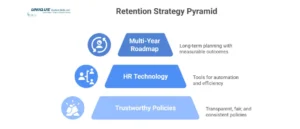
Creating a comprehensive retention strategy requires long-term planning and consistent leadership support.
Building Policies Employees Trust
Employees stay when policies are:
- Transparent
- Fair
- Consistently applied
- Rooted in employee feedback
Trust is the most valuable retention asset—and it is earned through actions, not slogans.
Leveraging HR Technology for Scalability
Modern HR teams use digital tools to automate routine tasks, freeing time for relationship-building and strategic planning.
Helpful platforms include:
- HR Information Systems (HRIS)
- Learning Management Systems (LMS)
- Engagement analytics tools
- Performance management platforms
- Onboarding automation tools
These solutions reduce errors, increase efficiency, and create a smoother employee experience.
Creating a Multi-Year Retention Roadmap
A retention roadmap gives HR leaders clear direction and measurable outcomes. A strong roadmap includes:
- Annual retention goals
- Benchmarking data
- Policy improvement timelines
- Learning & Development (L&D) milestones
- DEI and culture initiatives
- Leadership training commitments
- Regular performance reviews of strategies
Retention isn’t a one-year project—it’s a continuous cycle of listening, improving, and adapting.
FAQs About Employee Retention Strategies
1. What are the most effective employee retention strategies?
Hybrid work flexibility, digital skills training, recognition programs, and strong workplace culture lead the way in 2025-26.
2. How does a hybrid work policy improve retention?
It gives employees flexibility, boosts morale, and reduces burnout—three major drivers of turnover.
3. Why is digital skills training important in Canada?
Rapid digital transformation means workers need continuous upskilling to stay competitive and confident in their roles.
4. What HR trends are shaping retention in Canada?
Talent shortages, remote work expectations, AI adoption, and higher expectations for DEI.
5. How can small businesses improve retention without large budgets?
Focus on flexibility, recognition, mentorship, and career progression—all low-cost, high-impact strategies.
6. What is predictive HR analytics?
A data-driven approach that identifies employees who may be disengaging, allowing organizations to intervene early.
Conclusion: Preparing for the Future of Talent Retention
Employee retention strategies no longer revolve around perks or surface-level fixes. In today’s competitive landscape, organizations must prioritize flexibility, continuous learning, culture, data-driven decision-making, and employee well-being.
Canadian companies that embrace these strategies now will be the ones thriving over the next decade—attracting committed talent and cultivating workplaces people genuinely want to be part of.